
Unique packaging helps sanitary napkin brands stand out, but factors such as custom printing, packaging materials, design revisions, and order quantities can increase costs and add complexity. Explain that the goal of selecting packaging is to ensure it aligns with the brand positioning, target market, budget, and projected sales volume. For OEM sanitary napkins, packaging decisions have implications that go far beyond shelf appeal. They also affect unit price, minimum order quantities, SKU planning, inventory risk, and time-to-market.
What Packaging Options Are Available for OEM Sanitary Pads?
Direct answer: OEM sanitary pad packaging may include individual wrappers, printed outer bags, cartons, transparent bags or other formats supported by the manufacturer. The right choice depends on product configuration, brand positioning, target market and production capabilities.
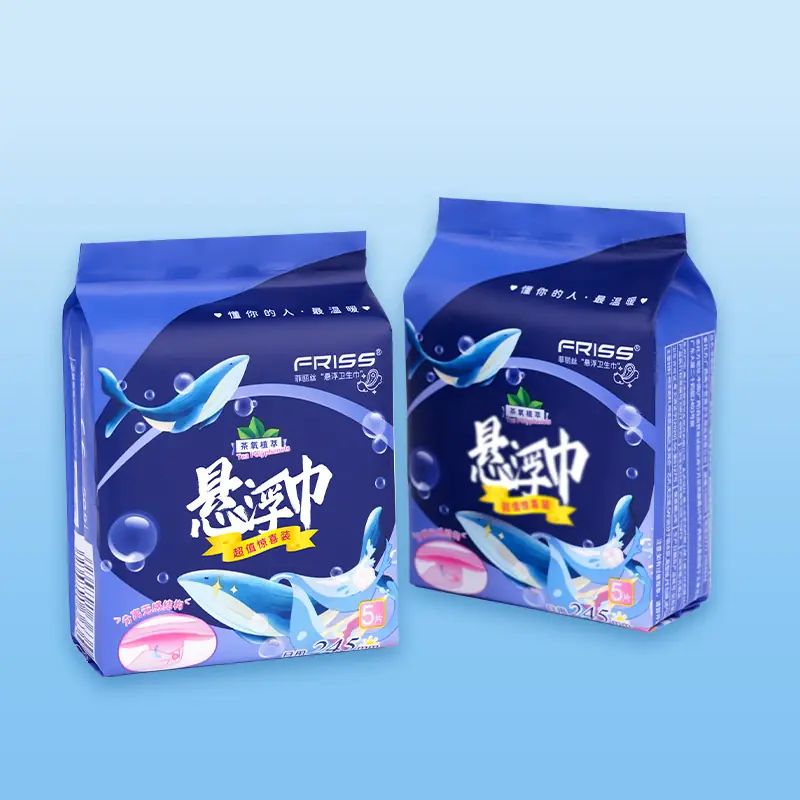
Printed Bags
1. Customization of colors, logos, product information, and designs is required.
2. Material, printing process, bag size, and order quantity will affect the cost and minimum order quantity.
3. Printing processes and available materials vary by supplier.

Paperboard Cartons
1. Suitable for brand promotion and shelf display.
2. Consider box dimensions, cardboard grade, surface treatment options, and packaging configurations.
3. Cardboard boxes may increase material and packaging costs; their suitability depends on the product and market.

Transparent Bags
1. A simpler way to display products or packaging contents when appropriate.
2. Logo labels or stickers can be added if supported by the supplier.
3. Transparent packaging saves space, which can help reduce shipping costs.

Individual Wrappers
1. Individual packaging for each product differs from retail packaging for multiple products.
2. Decisions regarding the materials, opening style, and print design for individual packaging can be made independently of the outer packaging.
3. More hygienic and portable
| Format | Potential advantages | Points to confirm |
| Printed bag | Flexible branding and product information | Material, print method, artwork versions and MOQ |
| Paperboard carton | Structured presentation and room for information | Board specification, finishing, dimensions and packing cost |
| Transparent bag | Product visibility and a simple visual presentation | Material suitability, print or label options and protection |
| Individual wrapper | Encloses each pad and supports portability | Wrapper material, opening design and line compatibility |
| Combined format | Pairs individual wrapping with branded retail packaging | Added materials, packing steps, total cost and volume |
How Does Packaging Design Affect Cost?
Packaging cost is shaped by more than the visible design. Material selection, dimensions, printing requirements, order quantity, number of versions and packing operations can all affect the final quotation.
Material and Packaging Size
- Larger bags or cartons may require more material.
- Material thickness, board grade, surface finish and protection requirements can affect cost.
- Packaging dimensions should fit the product without unnecessary bulk.
Printing Method, Colors and Finishing
- Printing options differ in setup requirements, production economics and visual results.
- Complex artwork, special finishes or multiple print versions may increase setup or material costs.
- Do not claim one printing method is always cheaper; compare quantity, material and supplier quotations.
Artwork Changes and Multiple SKUs
- Different lengths, pack counts, product types or language versions may require separate packaging artwork.
- Separate artwork versions can divide order volume across multiple SKUs.
- Frequent design changes can leave obsolete packaging stock or require new setup and approvals.
Packing and Logistics Considerations
- Consider packing steps and compatibility with the manufacturer’s equipment.
- Packaging dimensions affect carton configuration, storage and shipping efficiency.
- Compare total delivered cost rather than packaging unit cost alone.
A cost-driver graphic showing material, size, printing, artwork versions, packing process and logistics.
Why Can Packaging MOQ Differ from Product MOQ?
The sanitary pad production MOQ and packaging MOQ may differ because they can depend on different materials, suppliers, equipment, setup processes and purchasing units. Confirm the exact arrangement with the manufacturer and packaging supplier.
Product Production and Packaging Procurement Are Different
- Pad production quantity may depend on production-line planning, raw-material usage and factory order policy.
- Printed packaging may have its own supplier minimum, material order unit or print setup requirement.
- A project may need to reconcile two quantities rather than rely on a single MOQ figure.
Printed and Unprinted Packaging May Have Different Requirements
- Custom printed materials may require artwork approval, printing setup and a minimum production run.
- Unprinted or stock packaging may offer more flexibility if suitable formats are available.
- Do not promise lower MOQs without confirming current supplier terms and material availability.
Multiple Designs Can Increase the Effective MOQ per Version
- A total order may be divided among pack counts, product lengths, brands or languages.
- Even a substantial combined order may require separate minimum quantities for each printed version.
- Confirm whether quantities can be combined across SKUs or must be ordered separately.
| Scenario | Potential issue | Question to ask |
| One product, one artwork | A print minimum may still apply | What is the MOQ for this format and artwork? |
| One product, several languages | Each language may require separate artwork | Can language versions share a base design or be ordered together? |
| Several pad sizes | Different dimensions may need different pack sizes | Does each size have a separate packaging MOQ? |
| Unprinted packaging with a label | May reduce the need for custom printing, if feasible | Is this compatible with the product and target market? |
How Can Brands Balance Branding, Cost and MOQ?
The best packaging is not necessarily the most elaborate option; it is the option that meets brand and market requirements while fitting the launch volume and budget.
Prioritize the Packaging Elements That Matter Most
- Identify essential brand elements and required product information.
- Choose a consistent set of brand colors and a clear visual hierarchy.
- Avoid finishes or design elements that do not support a clear business objective.
Start with Fewer SKUs Where Practical
- Consider launching with a focused range before expanding pack counts, sizes or regional versions.
- Use a consistent brand system while keeping product information clear.
- Confirm whether one packaging structure can work for several SKUs instead of assuming it can.
Compare Custom Printing with Available Alternatives
- Ask whether stock, unprinted or standard packaging is available and appropriate.
- Consider labels or stickers only if compatible with the format, production process and destination-market requirements.
- Compare material cost, print cost, labor, appearance and inventory risk together.
Plan Packaging Around a Realistic Launch Quantity
- Estimate initial sales and reorder timing rather than choosing quantity only to reach a print minimum.
- Consider cash tied up in unused packaging and the risk of artwork changes.
- Ask whether packaging can be ordered, stored or released in stages; availability depends on supplier terms.
Confirm Regulatory and Language Requirements Early
- Identify destination markets before approving artwork.
- Check required languages, product information, warnings, importer details and other applicable labeling rules.
- Confirm market-specific requirements with qualified regulatory support where needed.
How Should You Choose Packaging for Different Brand Stages?
Use this section to make the advice practical for new and established brands. Present these as general planning examples, not fixed recommendations for every business.
| Brand situation | Possible approach | Main consideration |
| New brand testing demand | Consider a suitable standard format or focused printed-pack design | Limit initial inventory exposure while preserving essential information |
| Established brand with repeat orders | Evaluate custom printed bags or cartons with stable artwork | Balance visual consistency with forecasts and replenishment |
| Brand serving several countries | Plan language versions and market-specific information early | Artwork versions, separate quantities and compliance checks |
| Brand with multiple product sizes | Standardize visual identity while checking size-specific formats | Do not assume one physical package fits every product |
What Should You Prepare Before Requesting a Packaging Quote?
Product and Packaging Details
- Product type, dimensions and number of pads per retail pack.
- Whether individual wrapping is required.
- Preferred format: printed bag, carton, transparent bag or another supported option.
- Approximate pack dimensions, if available.
- Number of SKUs, sizes and artwork versions.
Brand and Artwork Information
- Logo and brand assets.
- Preferred colors, design references or existing packaging samples.
- Languages and destination markets.
- Artwork status: concept, draft or print-ready file.
Commercial and Timeline Information
- Estimated initial order quantity and expected reorder pattern.
- Target launch date.
- Target packaging budget or product price positioning, if available.
- Known market-specific labeling or documentation requirements.
Please share your target market, pack count, preferred packaging format, number of SKUs, estimated order quantity and artwork status. These details help us assess feasible packaging options and clarify factors that may affect cost, MOQ and lead time
Frequently Asked Questions
What is the best packaging for private-label sanitary pads?
There is no single best option for every brand. Printed bags, cartons, transparent bags and other formats have different presentation, cost and production considerations. The right choice depends on the target market, product configuration, order volume and available manufacturing options.
Does custom printed sanitary pad packaging always have a higher MOQ?
Custom printing can involve setup requirements or supplier minimums, but the exact MOQ depends on material, format, printing process, supplier and order details. Confirm the minimum for each artwork version.
Can I use the same packaging design for different sanitary pad sizes?
A shared visual identity may be possible, but different pad sizes or pack counts may require different physical dimensions or product information. Ask the manufacturer whether the formats can be standardized.
Can I use transparent or unprinted packaging for my private label?
This may be possible if the manufacturer offers a suitable format and it meets product-protection, branding and destination-market requirements. Confirm whether labels or stickers are feasible.
How do multiple language versions affect packaging cost and MOQ?
Each language version may require separate artwork and packaging quantities, depending on the supplier’s process. Ask whether versions can be combined or whether each has its own minimum.
Should I finalize packaging before the product sample is approved?
Plan packaging early, but check final dimensions, product details and artwork against the approved product specification and applicable labeling requirements before production.
Conclusion: Choose Packaging That Fits Your Brand and Order Plan
Summarize the key message: packaging decisions should balance brand presentation, material and printing costs, packaging MOQ, SKU complexity, market requirements and inventory risk. Assess the complete packaging plan alongside the product specification and production schedule.
Planning a private-label sanitary pad project? Share your target market, pack configuration, preferred packaging format and estimated order quantity with Yurun. Our team can help you review feasible packaging options and clarify the factors that may affect cost, MOQ and lead time.